Tag: health

  • The Pressure to Always Be “On”

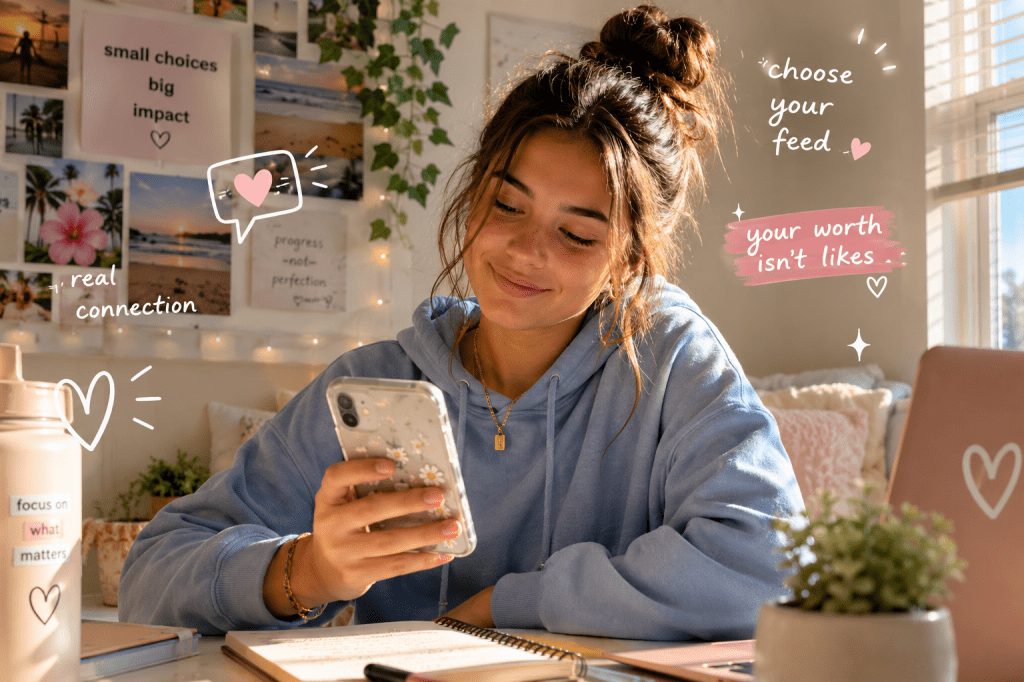
    It’s 1:30 AM, your phone lights up, and your friends are still texting, sending TikToks, snapping, and continuing conversations that should have ended hours ago. You’re exhausted, you know you have school the next day, but you stay on anyway. Not because the conversation actually matters, but because not answering feels like you’re slowly disappearing from it.

    This is the kind of pressure that doesn’t look like pressure at all. No one is telling you to stay up, and no one is forcing you to respond. It feels like your own decision, which is exactly why it’s so easy to ignore what’s really going on.

    Research connected to the National Institutes of Health shows that peer influence plays a major role in how teenagers use social media, especially when they are trying to feel included. Even without direct pressure, the need to stay connected can quietly shape behavior, leading people to spend more time online than they actually want to.

    In the moment, staying up later does not seem like a big deal. It feels like one small decision that will not really affect anything. The problem is that these decisions rarely stay small. Losing sleep, constantly checking your phone, and staying mentally involved in conversations late at night can build into stress, lower energy, and changes in mood over time. Studies on adolescents have also linked peer related pressure to increased anxiety and emotional strain, even when the pressure is indirect.

    A big part of this comes down to how much social connection matters, especially during high school. There is an unspoken expectation to be available, to respond quickly, and to stay part of everything. Choosing to step away can feel like choosing to be left out, even if that is not actually the case.

    That is where “Choices Over Consequences” becomes more than just a phrase. It is not about one night or one decision. It is about recognizing when you are acting out of habit or pressure instead of what you actually need. These small moments, like deciding whether to keep scrolling or finally go to sleep, are where the pattern either continues or starts to change.

    At the same time, this is not only an individual issue. The way social media platforms are designed plays a role in keeping people online longer, especially at night. Features like constant notifications, read receipts, and endless scrolling are built to encourage users to stay engaged. Some policymakers have started to question whether these designs should be regulated, especially for younger users, with ideas like limiting certain app features during nighttime hours or requiring stronger protections for teen accounts.

    That means the responsibility is not just on individuals to make better choices. It also raises the question of whether companies should be held accountable for creating environments that make those choices harder in the first place.

    Choosing to put your phone down does not feel important in the moment, but it is. It is a small way of taking control back, even if it means missing part of a conversation that will most likely not matter the next day.

    Source:

    National Institutes of Health (NIH) – “The Power of Peers”
    https://newsinhealth.nih.gov/2021/09/power-peers


  • Teen Suicide on Screen: What the Research Shows

    When a show about teen suicide becomes a cultural phenomenon, it does more than trend. It enters bedrooms, group chats, and late night scrolling sessions. For many teenagers, these stories feel personal and urgent. But researchers have been asking a difficult question: what happens when suicide is portrayed in vivid detail to a young audience?

    The answer, according to several major studies, is that portrayal is not neutral.

    In 2020, researchers such as Thomas Niederkrotenthaler published a study in JAMA Psychiatry examining U.S. suicide rates after the release of the Netflix series 13 Reasons Why. For those of you unfamiliar with the show, 13 Reasons Why follows a high school student, Hannah Baker, who dies by suicide and leaves behind a series of recorded tapes explaining the reasons she made this decision. Each episode centers on one of those “reasons,” portraying bullying, assault, and social isolation as contributing factors. The first season originally included a graphic depiction of Hannah’s suicide, which later drew criticism from mental health professionals.

    Researchers found that in the months following the show’s debut in April 2017, suicide rates among young, particularly boys aged ten to seventeen, increased significantly compared to expected trends. Some estimates suggested roughly a 28 percent increase among this age group in the month immediately after the release.

    However, the study did not claim that the show directly “caused” individual suicides. Instead, it showed a statistically significant population level increase that could not be explained by seasonal patterns alone. In other words, the timing mattered.

    For a show centered on a graphic, emotionally charged suicide narrative, the findings raised serious concerns about how stories are framed and delivered.

    This phenomenon is not new. Researchers have documented what is known as the Werther effect, named after Goethe’s novel The Sorrows of Young Werther, written in the 18th century.

    In modern research, David Gould and colleagues in 2003 found that highly publicized and sensationalized suicide coverage in the media was associated with subsequent increases in suicide rates. The more detailed and dramatic the coverage, the stronger the effect.

    In simple terms, what people see can influence what they consider possible. When suicide is shown as a powerful response to pain, it may make the idea feel more real or available to someone who is already struggling. Teenagers can be especially vulnerable because they are still developing emotionally and may act more impulsively than adults.

    This does not mean media alone causes suicide. But, it does mean that how suicide is portrayed can affect the risk of viewers and potentially influence them.

    In a world where streaming platforms reach millions of teenagers overnight, storytelling carries weight, For some viewers, these narratives are not just entertainment. They can feel personal, validating, or even instructive. When decades of research show that certain portrayals increase risk, the conversation shifts from opinion to evidence.

    The overall goal is not to silence difficult stories. It is to tell them in ways that protect, rather than harm, the people watching.

    Suicide is one of the leading causes of death among adolescents in the United States. When evidence suggests that certain portrayals increase risks are followed by measurable increases in youth suicide rates, that is no longer a cultural discussion. It is a public health concern.